(l-r, top to bottom) Flaco Jiménez, Dizzy Gillespie w/ Chano Pozo, Shakira, the Chessmen, 1980s Nuyoricans, Carmen Miranda, Daddy Yankee, Los Tigres del Norte, Desi Arnaz, Vernon and Irene Castle, Grupo Aventura, Central Park rumberos, Richie Valens and Jackie Wilson, Jenni Rivera, Los Lobos
Pop Music and Culture: CuBop, Up-Rock, Boogaloo and Banda. Latinos Making Music in the United States
CFA MH333/433 A1
MWF 12-1 CFA (855 Commonwealth) B36
Prof. Michael Birenbaum Quintero
Surveys the musical styles of Latinos in the US. Discusses the role of these musics in articulating race, class, gender and sexual identities for US Latinos, their circulation along migration routes, their role in identity politics and ethnic marketing, their commercial crossover to Anglo audiences, and Latin/o contributions to jazz, funk, doo-wop, disco and hip hop. Case studies may include Mexican-American/Chicano, Puerto Rican/Nuyorican and Cuban-American musics; Latin music in golden age Hollywood; Latin dance crazes from mambo to the Macarena; rock en español; the early 2000s boom of Latin artists like Shakira, Enrique Iglesias, and Jennifer López; reggaetón, race politics, and the creation of the “Hurban” market; and the transnational Latin music industries of Los Angeles, New York, and Miami.
From left to right, Jimmy Merchant, Herman Santiago, Frankie Lymon, Joe Negroni, and Sherman Garnes. Negroni and Santiago were Puerto Rican; Merchant, Lymon and Garnes African-American.
Boogaloo: "Cha-cha-chá with a backbeat"(1966-'68)
The quote is from the late Prof. Juan Flores, in an important chapter in his book From Bomba to Hip Hop, reproduced here.
From the documentary I Like It Like That
Musically, boogaloo was piano vamps and percussion patterns from mambo and cha-cha-chá with soul music's backbeat, plus Spanglish lyrics, and a brash and youthful rock n' roll spirit.
Joe Cuba's "Bang Bang" (don't let the false end at 2:45 fool you!). Keep an eye out for the timbales.
Joe Cuba's previous hit, "El Pito (I'll Never Go Back to Georgia)" (which gets some of its DNA from a famous predecessor we've seen in this class before).
Cinquillo
2+1+2+1+2
X . X X . X X ./ X . X X . X X .
Note that this is basically the tresillo with two extra beats
X.xX.xX. / X.xX.xX.
Habanera
3+1+2+2
X . . X X . X . / X . . X X . X . q . e q q
Note that this is basically the tresillo on top of the 1 and 3 of a straight 4/4.
X . . X . . X .
X . . . X. . .
Clave (son clave)
3+3+4+2+4
X . . X . . X . . . . X . X . . .
or the same thing backwards, like this
X . X . . . X . . X . . X . . . .
Also, see here
The experimental fusion between Cuban music and jazz, innovated by Mario Bauzá of Machete and his Afro-Cubans, and the collaborations of Dizzy Gillespie and Chano Pozo, and also performed by Cal Tjader and Stan Kenton, shares the instrumentation of mambo. A few differences are:
The Latin instruments (güiro, etc.) and syncopated bass lines of the early 1960s hits of Tin Pan Alley
Fast three chord jams borrowing from Cuban music. Compare the white group The Rascals' "Good Lovin'," a cover of African-American artists The Olympics' version of a Cuban guaracha by the Sonora Matancera (with Celia Cruz).
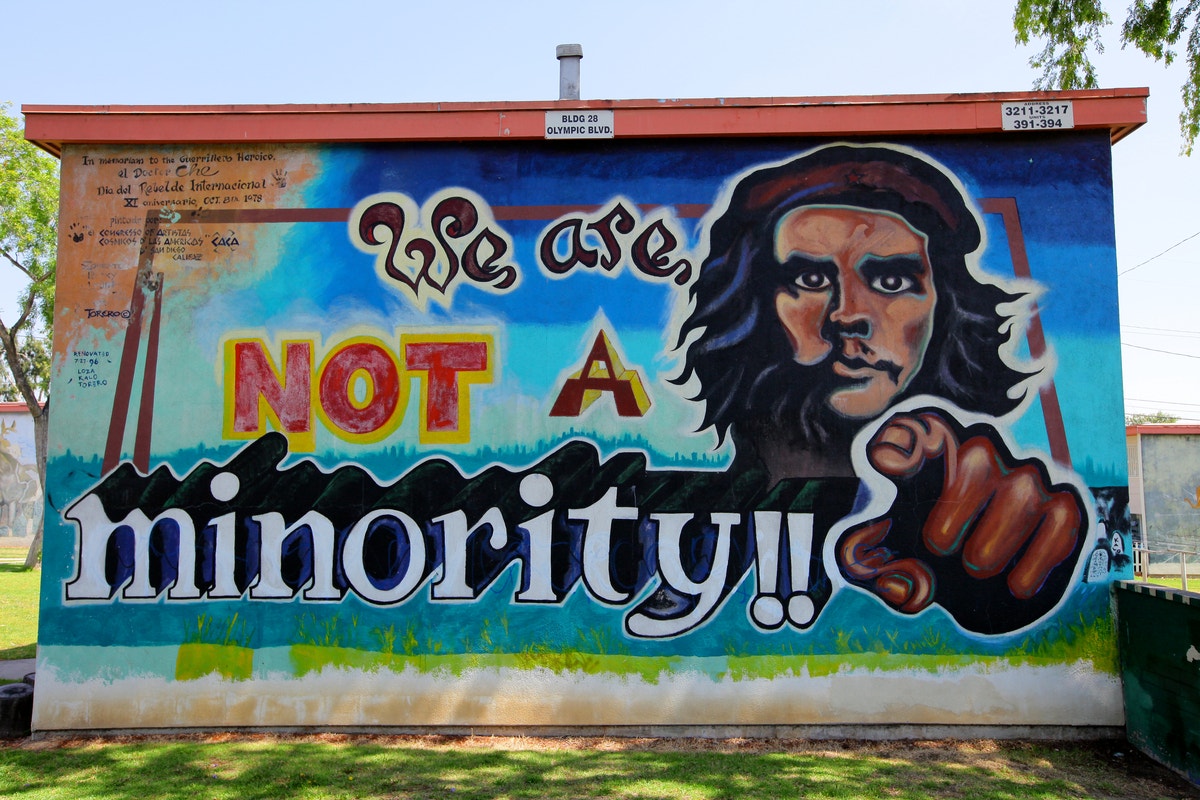
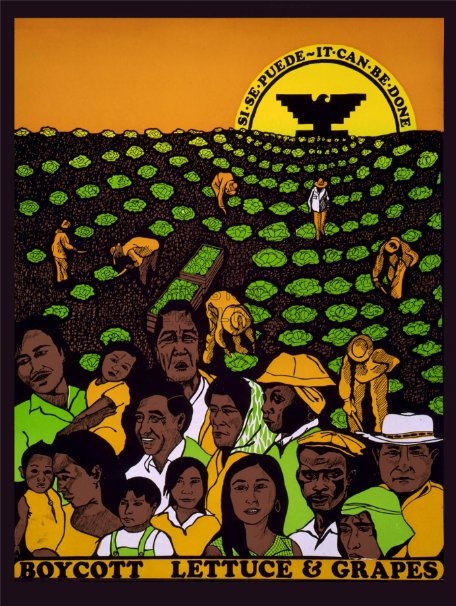
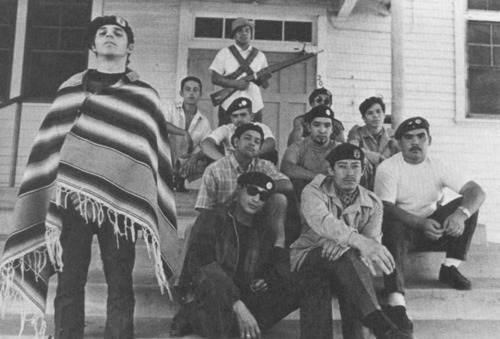
The Chicano movement was a confluence of related struggles: an assimilationist Mexican-American movement that sought equal rights of citizenship and political representation; a labor movement organized around Mexican-American (and to some extent, Asian-American) farmworkers; a student movement that organized against the Vietnam War, police discrimination and brutality, equality of education, and negative stereotypes of Latinos in the popular media; and a nationalist movement organized around the idea of creating an independent and territorially defined nation.
The Chicano movement had political, artistic, and of course musical ramifications. Those musical ramifications were varied, but in general they can be described as passing from a very ambiguous acknowledgement of their ethnicity to a much more straightforward racial pride.
Texas artists like Little Joe Hernández and Sonny Ozuña, who started off as younger exponents of the orquesta sound, were shut out of the mainstream music industry, much more than their East LA peers like the Premiers and Cannibal & the Headhunters, and were closer to rural Mexican culture. Little Joe Hernández, for example, had grown up picking cotton and hearing conjunto and orquesta in Central Texas. But bby the late 1960's, musicians like Little Joe were influenced by the hippie counterculture and the Chicano movement to move even more strongly toward conjunto music, with a heavy whiff of hippie-ness. His song "Las Nubes" became the unofficial anthem of the farmworker's union, and featured a hybrid aesthetic, with a traditional conjunto feel and rhythm and Spanish lyrics, but also a drum kit and electric guitar and some almost progressive rock-sounding interludes.
Another important stream was the rock and Afro-Cuban fusion pioneered by Santana. The path is more circuitous than it might seem. Carlos Santana was born in Mexico and grew up playing mariachi music. But he hated that music and was much more inspired by blues and rock in the multi-racial band he led when he moved to San Francisco. Afro-Cuban slowly began to come in with Mike Carabelo, a high school friend of Santana's who had picked up congas in drum circles, and especially from San Francisco club owner and rock impresario Phil Graham, a transpalnted New Yorker (Born Jewish in Germany and escaping right before World War II) who had grown up dancing in the Palladium. Santana played at the legendary Woodstock festival, to tremendous acclaim, especially when the Woodstock film came out.
This model, of Chicanos playing Afro-Cuban-tinged rock was influential for many bands, such as El Chicano, which, despite largely ignoring actual Mexican music, was quite political and up-front about being Chicanos.
Later, Los Lobos, of L.A., started experimenting with traditional Mexican music, and even put it into their cover of Valens' "La Bamba" for the movie of the same name - note the trad jarocho breakdown at the end of the song (2:20). Country-rocker Linda Ronstadt, a multi-platinum-selling artist who was the best known and best paid woman in the msuic industry during her heyday in the 1970s, and who had never highlighted being an Arizona Chicana, did an all-mariachi album called "Canciones para mi padre/Songs for My Father" in 1987, and two more albums of Mexican music in the early 1990s.
In a similar vein, Sonny Ozuña's band Sunny and the Sunliners (earlier, Sunny and the Sunliners) could be muy Tejano (here), or sing straight-up Sam Cooke-styleRhythm & Blues
By 1964, Mexican-Americans were important in the "garage rock" trend.
These groups did not overtly highlight the fact that they were Mexican-American, and to a certain degree even masked it. There were some moments in they revealed it, as in the introduction to Texas-born Sam the Sham (Domingo Zamudio) and the Pharaohs' "Wooly Bully" from 1965. Thee Midniters of East L.A. did a song called "Whittier Boulevard," an instrumental with a brief "Arriba, arriba!" at the beginning and named after a popular place for cruising ground for young people at the time.
The last hurrah from Cuba was the cha-cha-chá, an easy-to-dance alternative to the mambo, usually performed by string and flute bands called charangas (which had also played danzón). Here, its inventor Enrique Jorrín's charanga plays "Aprende a bailar chachachá":
Leaning into the elevator (that is, elevator music) - Pérez Prado's enduringly cornball cha-cha-cha "Cherry Pink and Apple Blossom White" was #1 hit in 1955.
But there was a lot going on in 1955. Changes were in the air.
As white teenagers started tuning in to black independent radio, they started making their own versions of the new sound, as in "Rock around the Clock," by Bill Haley and his Comets. This is the song that took the #1 spot from Pérez Prado.
It's odd to think that cha-cha-chá and rock were both on the radio at the same time, but there was lots of cha-cha-chá in early rock. The Bill Haley's B-side to "Rock around the Clock" was "Mambo Rock," basically a "Manisero" send-up.
And of course, there was African-American bandleader Richard Berry's roch-cha-chá "Louie Louie," written in 1955, recorded in 1957, and a big hit for white rockers The Kingsmen in 1963:
Cha-cha-chá would linger on, emerging in unexpected places in the rock canon:
***********
But rock was a bring break from Latin music, which was becoming increasingly less popular. In the early 1960's, bossa nova was a Brazilian middle-class music. It take the national music, samba, an Afro-Brazilian street music (which sounds like this) and puts it in the guitar in a syncopated rhythm but with sophisticated harmonies and an introspective mood:
After a bossa nova concert at Carnegie Hall in New York in 1962, jazz musicians, particularly the mostly white musicians that were part of the West Coast "cool jazz" movement, such as Stan Getz, Charlie Byrd, and Dave Brubeck, began collaborating with Brazilian bossa nova musicians. Here, from, Getz's famous album with Astrud and João Gilberto. "Garota de Ipanema/Girl from Ipanema."
This was the last importation of Latin American music to the US for a while, although Latinos would continue to make their own musical styles. Among other things, bossa nova existed on the other side of the cultural divide from the raucous and youth-focused rock and roll. Here's Frank Sinatra with Tom Jobim.
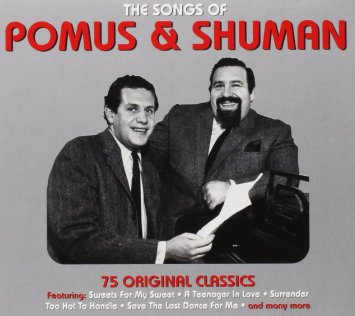
Many of the industrial songwriters of Tin Pan Alley's Brill Building were Jewish mambo-niks who frequented the Palladium a few blocks up Broadway.
Mamboniks like Doc Pomus and Mort Schuman penned a number of songs with a significant (if not necessarily "authentic") Cuban feel for the mostly African-American R&B act they worked with: Pomys even called these songs: "Jewish Latin."
Check out the underlying habanera rhythm (or similarly asymmetrical variants) in The Ronettes' "Be My Baby" (1963), The Drifters' (güiro-filled) "Under the Boardwalk" (1964), Ben E. King's "Stand by Me" (1960/61, from the same recording session as King's "Spanish Harlem"). These same songs are filled with castanets, güiros, maracas, and other Latinoid signifiers. The bassline would stick around long enough and be whitened enough to be used by Fleetwood Mac in "Dreams" (1977).
Three-chord Cuban songs formed another musical cell used in much music in the 1960s: "Caramelo" by the Sonora Matancera (with Celia Cruz singing) was repurposed as "Good Lovin'," first by an African-American group, the Olympics (1965), then a best-selling rock cover by The Rascals (1966). Another, slower, version of the three-chord Cuban son shows up in the Isley Brothers' "Twist and Shout" (1961) and the McCoys' "Hang on Sloopy" (1965). (This last song was later, strangely, covered by the seminal Cuban son pioneer Arsenio Rodríguez in 1966). All of this was with the involvement of Brill Building mambonik Bert Berns, whose music all had some degree of Cuban feel.
Bolero, that old staple of the Rhumba Era Latunes, would also play a part in many rock musicians' more romantic repertoire. Elvis, of course, but also the Beatles. New Orleans Rock Tresillo and African-American Latin
Even earlier, tresillo-based rhythms had remained part of the repertoire in black New Orleans music (which was mostly small-label stuff rather than Tin Pan Alley). This stuff was an important part of early rock and roll in the 1950's. Tresillo bass (sometimes with the extra note making it a habanera, and often doubled by baritone saxophones) also was popular in the seminal rock records produced by New Orleans producer Dave Bartholomew who heard them on a Cuban record (and used it in his own hit "Country Boy" from 1949). So, the music of Fats Domino ("Blue Monday" of 1957) and Little Richard ("Slippin' and Slidin'" from 1957) is appropriately tresillo-heavy.
Black musicians were also very into the maraca. Chuck
Berry (of "Johnny B. Goode") used maracas in his first hit "Maybellene"
(1955)...
... and Bo Diddley's "Bo Diddley" (1955) not only has maracas but is also a straight up son clave rhythm.
Finally,
it's worth mentioning the ways in which funk used then Afro-Caribbean
concept of dividing up simple rhythmic parts between different
instruments to make complex rhythmic textures, as in James Brown's "Say It Loud (I'm Black and I'm Proud)," which also features a break using son clave at 1:35 and 2:32.
Rock and R&B (from the Brill Building to Motown)
These trends — mambo and the New Orleans tresillo — met in some of the early Tin Pan Alley rock hits, too, as with Jerry Lieber and Mike Stoller, composers of (for example) Big Mama Thornton's "Hound Dog," later covered, famously, by Elvis Presley. (Listen for the tresillo in the bass).
The Latinish feel was also taken up by black-owned commercial music as well, as in Motown. Listen for the conga break in this Tempations tune:
Mario Bauzá learned jazz arrangement and harmonies during his work with the African-American swing musicians Cab Calloway and Chick Webb. He took those lessons to Machito and the Afro-Cubans. Mario Bauzá is the second trumpeter from the left.
More Machito: "Carambola"
Now in the 1970s, an elderly Machito and Graciela (his sister and vocalist with the Afro-Cubans), with Bauzá grooving out behind, perform the santería-themed song "Changó 'tá vení."
The Machito group was popular among white audiences during the mambo craze of the 1950's, as in this redo of the Chick Webb swing tune "Stompin' at the Savoy" as "Mambo a la Savoy." They also had a fair number of sings that might be described as "exotic," like "Desert Dance / Cleopatra Rumba."
The Afro-Cubans were also popular among African-Americans, including the musicians who were revolutionizing swing music by transforming it into the more technically sophisticated and experimental be-bop. One of these musicians was the legendary African-American saxophonist Charlie Parker, here playing with Machito. (Jazzheads can check out an analysis by Steve Coleman here).
Another of the jazz revolutionaries was the brilliant ironic hipster Dizzy Gillespie.
Chano Pozo and Dizzy Gillespie.
Music was not the only arena in which African and Afro-Caribbean artistic forms influenced modernist artists. It was central to the visual abstraction of Pablo Picasso at the beginning of the 20th century...
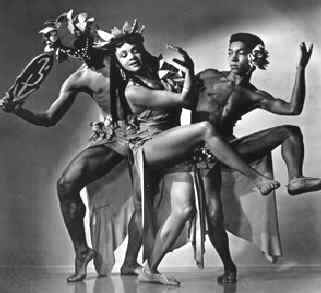
... and the modern dance of African-American choreographer and anthropologist Katherine Dunham.
George Russell's pioneering composition "Cubano Be Cubano Bop" was premiered by Gillespie and Pozo in 1947.
A third CuBop pioneer was the white, West Coast bandleader Stan Kenton, who in 1947 recorded a cover of the Cuban classic song "The Peanut Vendor" which included three percussionists from Machito's band and Machito himself on maracas.